
Why Instagram is not enough
Social media shows the weekend. A website shows the whole season: where you race next, how every round went, the photos, your story, and how a brand can work with you. It is also the only place you control: the layout, the order, the message and the address.
For fans it is the place to check the calendar before a race weekend and read your message after it. Posts disappear down a feed; the season page and the race reports stay.
When a marketing manager forwards your name to a colleague, they send a link. Make it a link to something that answers their questions without a call.
The pages fans and sponsors go through
Home: your name, your level, the next race and your latest news, on the first screen.
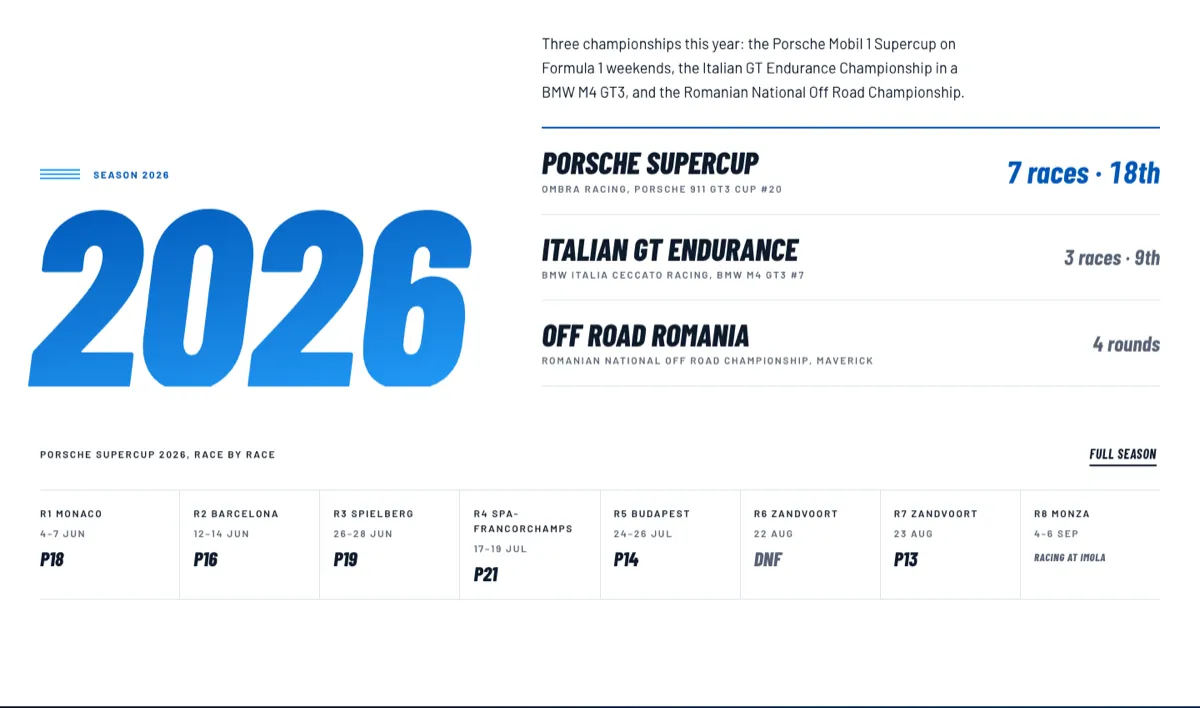
Season: every championship, the race calendar and the result of every round.
My story: your path from karting to today, with the key results.
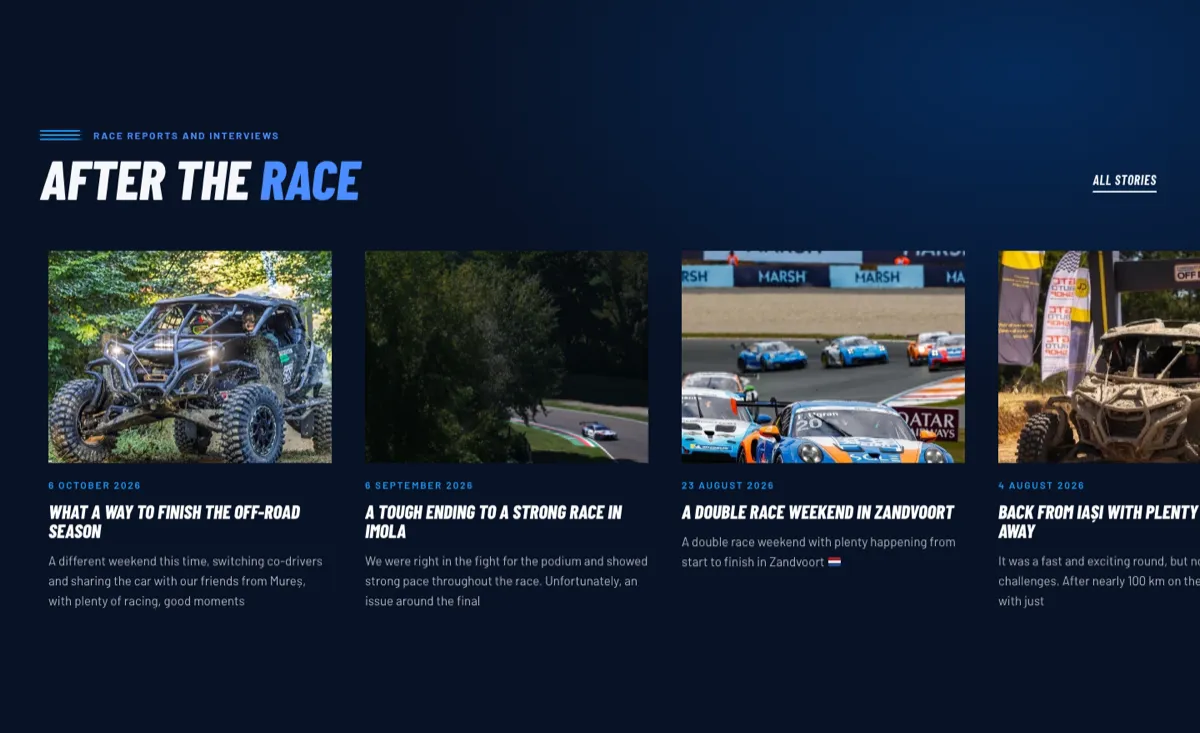
News: your message after every race, so fans hear the story from you first.
Gallery: photos from every race, by series and season, for fans and for partners’ channels.
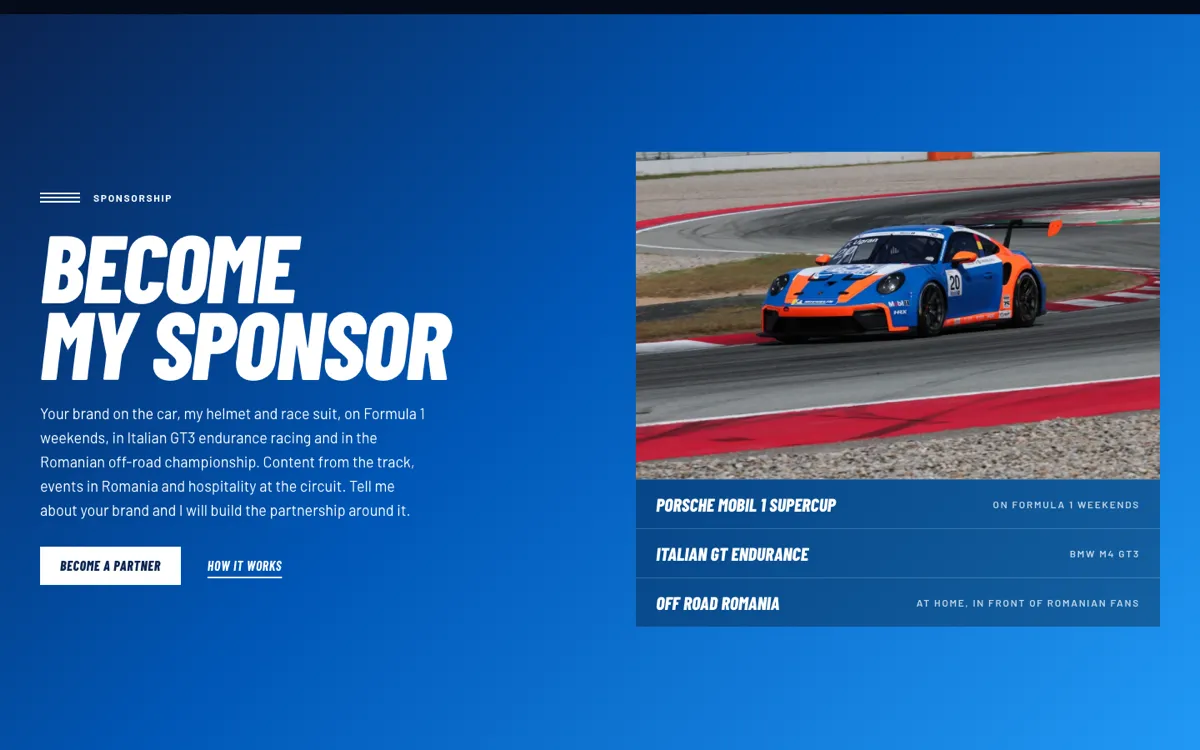
Partners: what a brand gets and how to start the conversation.
Media and contact: press material in one place, and a form that reaches your inbox.
Keep the season current
An out-of-date calendar is worse than none: fans miss the race, and a sponsor reads it as a driver who stops caring when nobody is watching. Build the season so that each race is entered once, with its result, and the calendar, the season page and the next race on the homepage update from it.
Pair it with a short message after every weekend: how it went, in your words, with a few photos. Fans read it as the story behind the result; a brand reads it as proof you deliver every round.
Make the partner page do one job
The partner page answers two questions: where does a brand appear (car, race suit, content, events), and what is the next step. One clear form or contact beats a long list of options.
Prices for sponsorship packages are usually better in a conversation or a media kit than on a public page.
Be found when someone searches your name
Sponsors, journalists and fans search your name. Make sure they find your site first:
A title and description for every page, written for people, with your name and your series.
Google Search Console set up, the sitemap submitted and the pages sent for indexing.
Fast on a phone: compressed images and page caching, because most people will open it on mobile.
Your own domain, renewed every year. An expired driver domain can be bought by anyone, and old links from press articles keep pointing to it.
Make it yours to update
Build the site on a platform you can edit yourself. On WordPress with Elementor you can change texts, add photos and post race reports without waiting for a developer, which is what keeps a driver site alive through a season.